Why Windshield Pillars On Modern Cars Got So Thick They’re Now A Genuine Safety Risk - Jalopnik
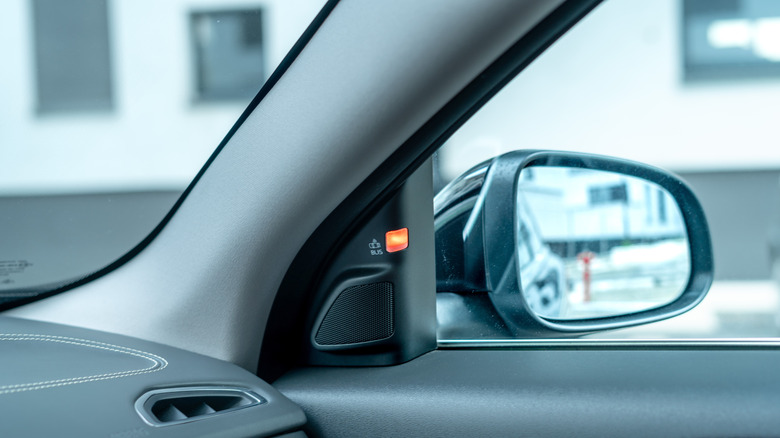
RoClickMag/Shutterstock If you're among the drivers complaining about outward visibility, perhaps your A-pillars are contributing to that conversation. From...
RoClickMag/Shutterstock
If you're among the drivers complaining about outward visibility, perhaps your A-pillars are contributing to that conversation. From Chevy Bolts to Tesla Model Ys, there are countless debates online about how A-pillars in these cars are creating blind spots and near misses. Unlike cars from yesteryear, modern automobiles have much thicker A-pillars, which, if you didn't know, are the structural supports on either side of your car's front windshield. As you may have guessed already, a major reason for their increased thickness has to do with occupant safety during a rollover.
Around 2009, the NHTSA issued a mandate (phased in late 2012 and running through 2017) that required vehicle roofs to withstand three times their own weight. This was fairly similar to how IIHS evaluated roof strength, a stricter test which the organization started in 2009 and discontinued in 2022. The reason for this discontinuation? Nearly all modern vehicles were earning good ratings, which means they were capable of withstanding a force of at least four times their own weight before a plate created a 5-inch dent-hole in the roof.
As you may well know, passenger vehicles are pretty heavy these days, especially if you consider EVs. Dare we remind you of the near-9,000-pound GMC Sierra EV or the hulking Hummer EV? According to Brian Latouf, former director of structure integration and body systems computer-aided engineering at General Motors (via Wards Auto), "It's pretty tight in there. You have to have certain cross-sectional space [inside an A-pillar for it] to be structurally stable under higher loads." Not only is roof strength a contributing factor, but since the A-pillars also integrate airbags, speakers, a bunch of wiring, and even grab handles (in certain trucks and SUVs), they eventually grew in size. Then there is the fact that the A-pillars have padding and other bits of trim to be soft enough to meet federal head-impact standards.
A closer look at A-Pillar visibility issues and how they manifest
Mulevich/Shutterstock
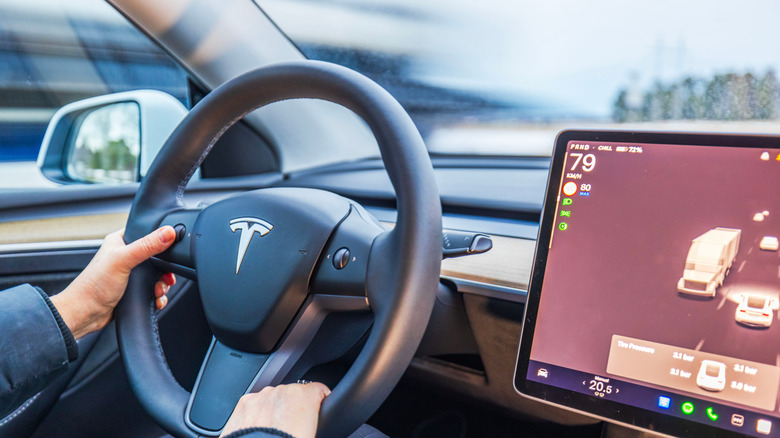
Depending on the vehicle and the angle, it's entirely possible to miss someone on their bicycle or a pedestrian, especially if you're making a left turn. This hazard can be a problem on the passenger side as well. You may or may not have experienced this firsthand, but it wouldn't be wrong to call it a genuine problem. While some modern cars get blind-spot and pedestrian detection systems, they may not work all the time reliably. Take ilovecostcopizza's Reddit post, for example. The A-pillar blind-spot almost caused the Redditor to hit a four-year-old kid. This Redditor claims that his car, a Tesla Model Y, did not bother with any kind of warnings.
A-pillar visibility can be even more of an issue if you're vertically challenged. According to The Wise Drive, the further you move the driver's seat forward, the closer you are to the A-pillar and the more it obscures your overall visibility. Although automakers like Toyota and GM have been touting various innovations to make virtually "see-through" A-pillars, as of now, these are mostly patents and research prototypes that might possibly end up in future models. While not as fancy or high-tech as these concepts, if your car's A-pillar is currently bothering you, the primary solution is to peek around it and double-check.
Despite automotive safety coming a long way since the days of yore, the question we ought to be asking is: should the idea of increased passenger safety be at the expense of potentially harming walking pedestrians and-or cyclists? Inside or outside, they are all humans, after all.