Wednesday briefing: Can Burnham seek a different path to Trump’s world order?
Good morning. In the early hours of Tuesday a plane carrying Andy Burnham, a handful of UK ministers, an excited group of British political journalists, and Burnham’s wife, Marie France, landed at a New York ai...
Good morning. In the early hours of Tuesday a plane carrying Andy Burnham, a handful of UK ministers, an excited group of British political journalists, and Burnham’s wife, Marie France, landed at a New York airport for one of Burnham’s first major outings as prime minister: a face-to-face meeting with Donald Trump.
Considering the president once described Burnham as the mayor of “a town,” and the prime minister once said Trump wouldn’t be welcome in said town (Manchester), the meeting yesterday afternoon went remarkably well.
That was the feeling among observers at the UN general assembly, an annual festival of hobnobbing and dealmaking for global leaders. Save for a few minor hiccups (Trump described Burnham as a “natural businessperson,” which will be news to Burnham), their meeting was relaxed. Marie France was entertained at a “spouses lunch” with Melania, and Burnham will no doubt have ended the day with a sense of relief.
But for all the warm words in Manhattan, Burnham and his foreign secretary Ed Miliband still have tricky questions to answer about how they deal with Trump. Faced with a resurgent far right that has been emboldened by his administration, how should Burnham approach the country that was – until recently – the first ally Britain would call in a diplomatic crisis? Today’s newsletter tries to answer that question with the help of our political editor, Pippa Crerar, who was on the plane. First, though, here are the headlines.
Five big stories
-
UN general assembly | Donald Trump has called on nations to unite to isolate Tehran and bring down global energy prices, as he gave a bellicose defence of his administration’s foreign policy and decision to strike Iran.
-
The far right | Charities have condemned footage of a far-right activist using a blade to slash an inflatable dinghy in the Channel while a rescue worker was onboard, in a further escalation of organised anti-immigration protest.
-
UK news | Children as young as 13 in the UK have been referred to a specialist clinic for a “devastating” bladder condition linked to sustained use of ketamine.
-
West Bank | British banks and financial institutions are receiving warnings from MPs that they should not invest in Israel’s E1 settlement project.
-
UK politics | Andy Burnham has opened the door to fighting the next election on the UK rejoining the EU, but said his immediate priority was continuing to rebuild bridges with European allies.
In depth: ‘There are some really thorny issues coming up’
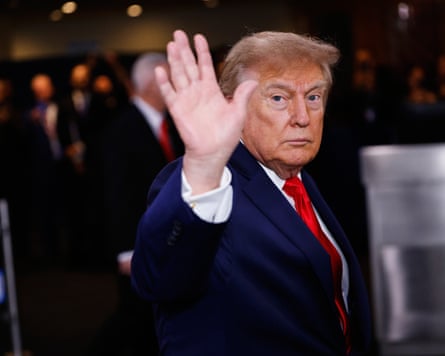
A non-exhaustive list of Trump’s recent foreign policy achievements is a good reminder of just how swiftly he has destroyed what is rosily described as the “rules-based international order”. Since taking office in 2025, he has installed loyalists in key positions, flirted with the idea of withdrawing from Nato, abolished USAID, gutted the US state department, threatened to acquire Greenland “by any means necessary”, captured the president of Venezuela and recast foreign policy as a brutal means of putting “America first”. His administration’s national security strategy, published in December 2025, was described by one former Pentagon official as a “manifesto for the global far right”. It declared that Europe faces the “stark prospect of civilizational erasure” (echoing the far-right conspiracy of a “Great Replacement”) and said that America would encourage the promotion of “patriotic European parties”.
Despite this, western leaders have taken a while to adjust to the second Trump presidency. “Starmer got quite a lot of criticism for being obsequious to Trump,” Pippa tells me. His reverence was on full display when he placated Trump with a royal visit that included a dinner-party seat next to the Princess of Wales, and when he struck a controversial trade deal that will force the NHS to spend more on US-branded drugs (the deal, for which the US agreed not to put tariffs on British pharmaceutical exports, could cost the NHS as much as £44.7bn by 2030, my colleague Aditya Chakrabortty reported in June).
Starmer’s stance gradually toughened as he realised that placating Trump was no guarantee of protection. Later in his premiership, he refused to let Trump use UK military bases in America’s initial strikes on Iran. “But he was seen by some inside the government as being too flattering and fawning,” says Pippa.
What’s changed?
On the surface, not much. Within hours of arriving at the UN, Trump managed to alienate just about everyone, telling a journalist from CNN, one of the three networks he’s banned from the White House, “you should not be here covering me,” openly contemplating the annihilation of Iran, a UN member state, taking a shot at Cuba and attacking the UN for “imposing a radical left-wing agenda”.
Burnham, meanwhile, wasn’t that different in tone from Starmer. He shook Trump’s hand, forgave him for once describing him as the mayor of a town, made the obligatory noises about loving the US, and appeared to nod along while Trump excoriated the Chagos Island deal (Starmer’s proposal to give Mauritius sovereignty over the island on the condition that the UK can continue to operate the Diego Garcia military base there). “Our understanding is that Downing Street is sticking to the Chagos deal,” Pippa tells me.
Even so, Burnham has said he wants to take a different approach to US relations, suggesting in June that he wouldn’t just “go along with anything they say”. The clearest sign of this intention was the sweeping sanctions that Ed Miliband imposed on trade with Israeli settlements earlier this month. At yesterday’s meeting, a journalist asked Trump what he thought about the decision. Trump didn’t take the bait, and instead deferred to Burnham.
“It was an unusual show of reticence,” Pippa says. It seemed like a vindication of the careful diplomatic work that took place over the summer, when Miliband and diplomats at the Foreign Office formed a 12-nation coalition to back the policy. Perhaps it will give them confidence that it’s possible to make a principled stand without suffering severe repercussions.
What were the flashpoints?
“It’s impossible to get away from the fact that despite the cordial relations, there are some really thorny issues coming up,” Pippa says. One of those is Iran. Burnham told journalists on the plane to New York that he would be pushing Trump to de-escalate the conflict (Trump said yesterday that he’d strike a deal with Iran after the midterm elections, which seems highly unlikely). Britain has longstanding diplomatic ties with Saudi Arabia, and Burnham recently agreed that Britain would help refuel Saudi jets that are defending energy infrastructure against Houthi rebels. With this decision, he’s treading a fine line between assisting a regional ally, and getting drawn into a wider conflict.
In his speech at the general assembly, Burnham announced he would be launching a new international centre to establish global standards on AI. It’s unclear whether he’ll go as far as nations such as Norway and Finland in backing legislation to prevent the launch of new AI models that haven’t undergone rigorous safety testing, something that ministers in Starmer’s government were previously exploring. In any case, his speech on AI put him firmly at odds with Trump, who described attempts to regulate AI as a “globalist scheme”, and declared that from now on, his administration will now be referring to AI as SI: Super Intelligence.
What should Burnham do next?
As the Trump administration has helped to erode old alliances like Nato and the G7, new and temporary alliances have emerged, including the nations that Miliband convinced to back his West Bank sanctions. In a speech at Davos earlier this year, Canada’s Mark Carney spoke of a “rupture in the world order” and called for the world’s democratic “middle powers” to come together to build alliances based on shared values.
“Burnham doesn’t want to take the Carney approach of all-out diplomatic war with the US, because the US is still our biggest security and economic ally,” Pippa tells me. “But we live in a world of spheres of influence – the US, China, and the EU – and that means having to make decisions about which sphere we want to belong to, whether geographically, or ethically.”
As the Guardian contributor Steve Bloomfield recently wrote in this interesting piece, the idea of foreign policy with an “ethical dimension” of the sort once espoused by the Labour foreign secretary Robin Cook has often been regarded as something of a joke. But in a battle between liberal democracies and an authoritarian far right, demonstrating an alternative to the cruelty and belligerence of the Trump administration is arguably more important than ever. Miliband’s sanctions announcement is a promising start, but nobody knows yet how far Burnham will be willing to go.
What else we’ve been enjoying
-
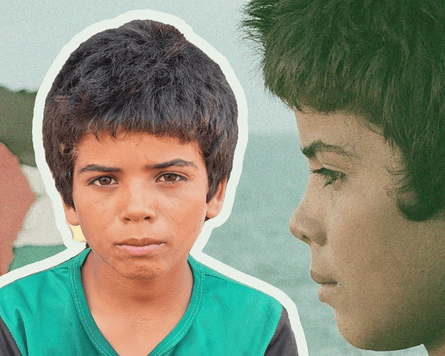
The diary of a 12-year-old boy living in Gaza, part of our powerful Gaza: a week in the life series about the daily routines of ordinary Palestinians, is not an easy read and all the more essential to take in because of that. Libby
-
For those of us keen to understand more about the complexities of our prison crises, this interview with Pia Sinha, head of the Prison Reform Trust, is a hugely enlightening read. Lucinda Everett, newsletters team
-
The most interesting part of any party conference is what the politicians are trying to avoid talking about in public: here Gaby Hinsliff explains why the pensions triple lock is prompting a phoney debate on tax and spend. Libby
-
“Most clubs have got cryotherapy chambers”. That’s just one of many brilliantly debunking insights from a top performance director in an interview with Sam Cunningham about how pseudoscience is taking over football. Lucinda
-
I’m a true believer in olive oil, so was relieved to hear Harvard professor Daniel Lieberman tell our Science Weekly podcast that Mediterranean trumps all the other faddy diets he’s investigated. Libby
after newsletter promotion
Sport
Cricket | Will Jacks excelled with both bat and ball as England overwhelmed Sri Lanka by 89 runs in the first one-day international at Chester-le-Street.
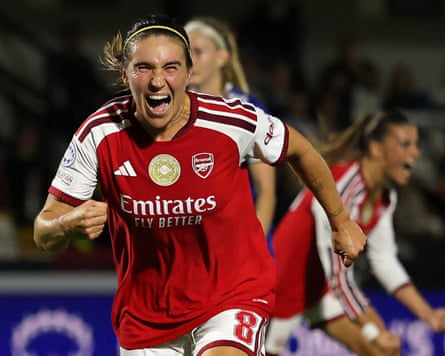
Football | Manchester City rallied from two goals down to draw 2-2 at Bayern Munich in the return of the Women’s Champions League. Two-time European champion Arsenal needed a stoppage-time winner to defeat HB Køge 1-0 at home.
Rugby union | England back row Henry Pollock has signed a bumper new contract with Northampton. The 21-year-old has agreed a “multi-year” deal, the Prem champions announced on Tuesday morning.
The front pages
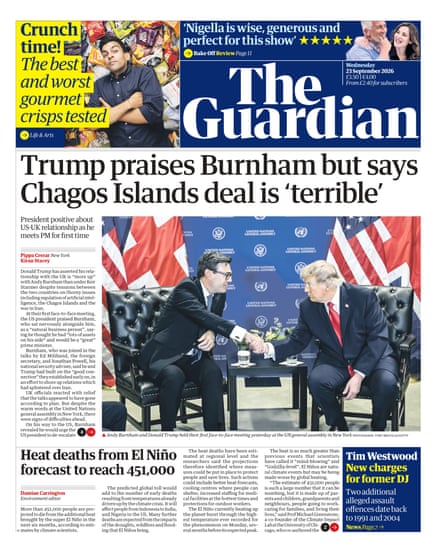
The Guardian leads on the prime minister’s meeting with the US president, under the headline “Trump praises Burnham but says Chagos Islands deal is ‘terrible’”. The Times has “Trump wins review of ‘ridiculous’ Chagos deal”, while the Telegraph says “Burnham bows to Trump on Chagos”. The Mail leads with “Burnham wobbles on Chagos as Trump hits out”.
The i goes with “Burnham warns world over AI – and sets UK on collision course with America”. The Mirror looks to the meeting between the leaders and simply asks “Don well?” Elsewhere, the Financial Times reports “White House and Gulf billionaires back Boehly swoop on Lukoil assets”. And under the headline “Pulp fiction”, the Sun looks at Piers Morgan’s threats to sue Earl Spencer over his new memoir.
Today in Focus: The Latest
Trump v the media
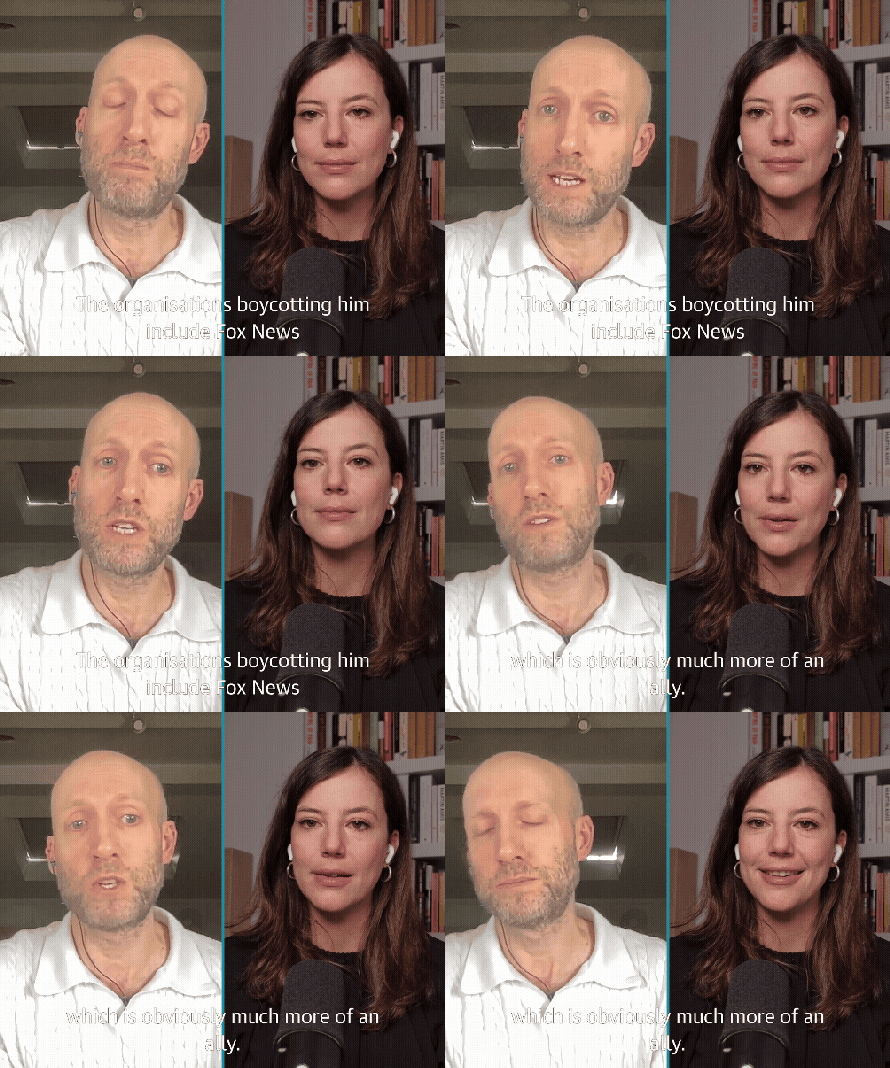
In what is one of the biggest battles yet between the press and Donald Trump, major TV networks have united in a boycott of pooled coverage of his administration. It comes after three news organisations – CNN, MS Now and Politico – were denied access to the White House because of Trump’s concerns about their coverage. Lucy Hough speaks to the Guardian’s international news editor Paul Owen.
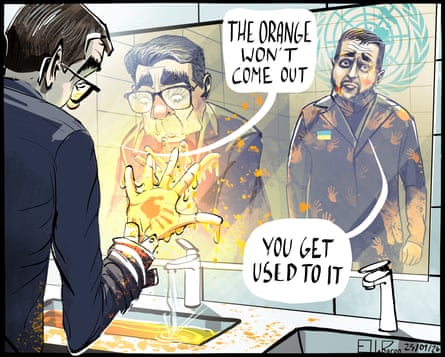
Cartoon of the day | Ella Baron
The Upside
A bit of good news to remind you that the world’s not all bad
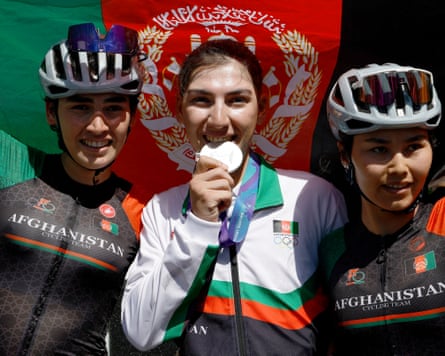
When 23-year-old Fariba Hashima started cycle training in her native Afghanistan as a teenager, she was attacked with stones and had to disguise herself as a boy to pursue her sporting dreams. Yesterday Hashima – who left her home for Italy after the Taliban returned to power in 2021 - won an Asian Games silver medal, and said she hoped her success would inspire other young women. “I was born inside a country where the women who dream are getting attacked, and I’m really happy that I have fought against that,” she said. “I hope that the next generation will come here and represent their country without any fear.”
Sign up here for a weekly roundup of The Upside, sent to you every Sunday
Bored at work?
And finally, the Guardian’s puzzles are here to keep you entertained throughout the day. Until tomorrow.
-
Quick crossword
-
Cryptic crossword