Yayoi Kusama: Japanese avant-garde artist dies aged 97
Image source, ReutersImage caption, Polka-dots, pumpkins and infinity room mirrors are hallmarks of Kusama's artistryByKurumi MoriTokyo correspondent and Harry SekulichUpdated 47 minutes agoJapanese avant-garde...
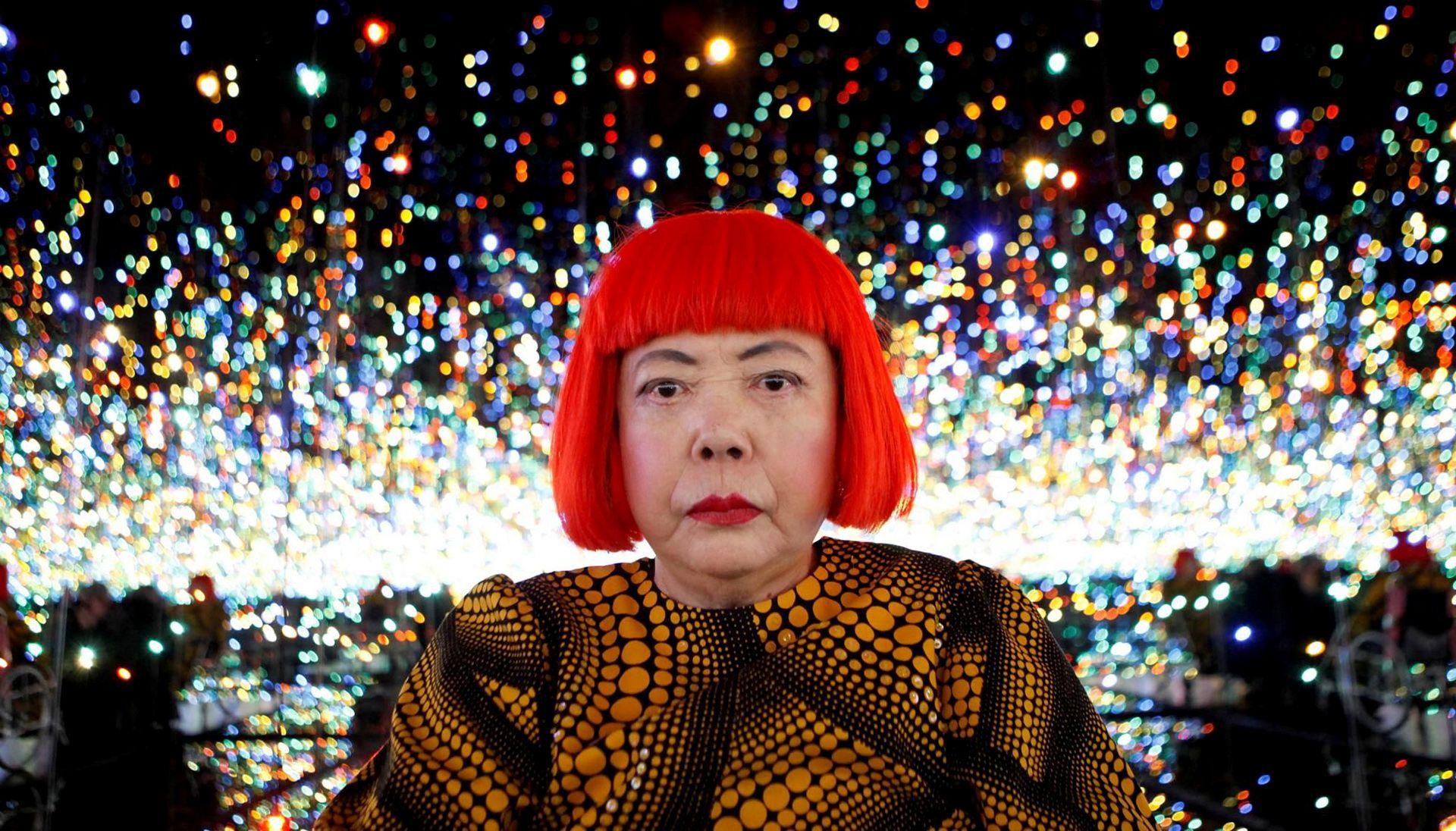 Image source, Reuters
Polka-dots, pumpkins and infinity room mirrors are hallmarks of Kusama's artistry
ByKurumi MoriTokyo correspondent and Harry Sekulich
Updated 47 minutes ago
Japanese avant-garde artist Yayoi Kusama, who became famous for her colourful polka dot-covered sculptures and installations, has died at the age of 97.
Kusama, who had voluntarily lived in a psychiatric hospital for decades, was known for her bright red wig and her giant, quirky creations.
Her exhibitions drew large crowds to galleries around the world, and her vibrant works fetched some of the highest ever prices for a female artist.
A statement from her company said: "Throughout an extraordinary lifetime devoted entirely to artistic creation, Kusama pursued an internationally acclaimed career as a pioneering avant-garde artist whose creative practice encompassed visual art, performance, fiction, and poetry."
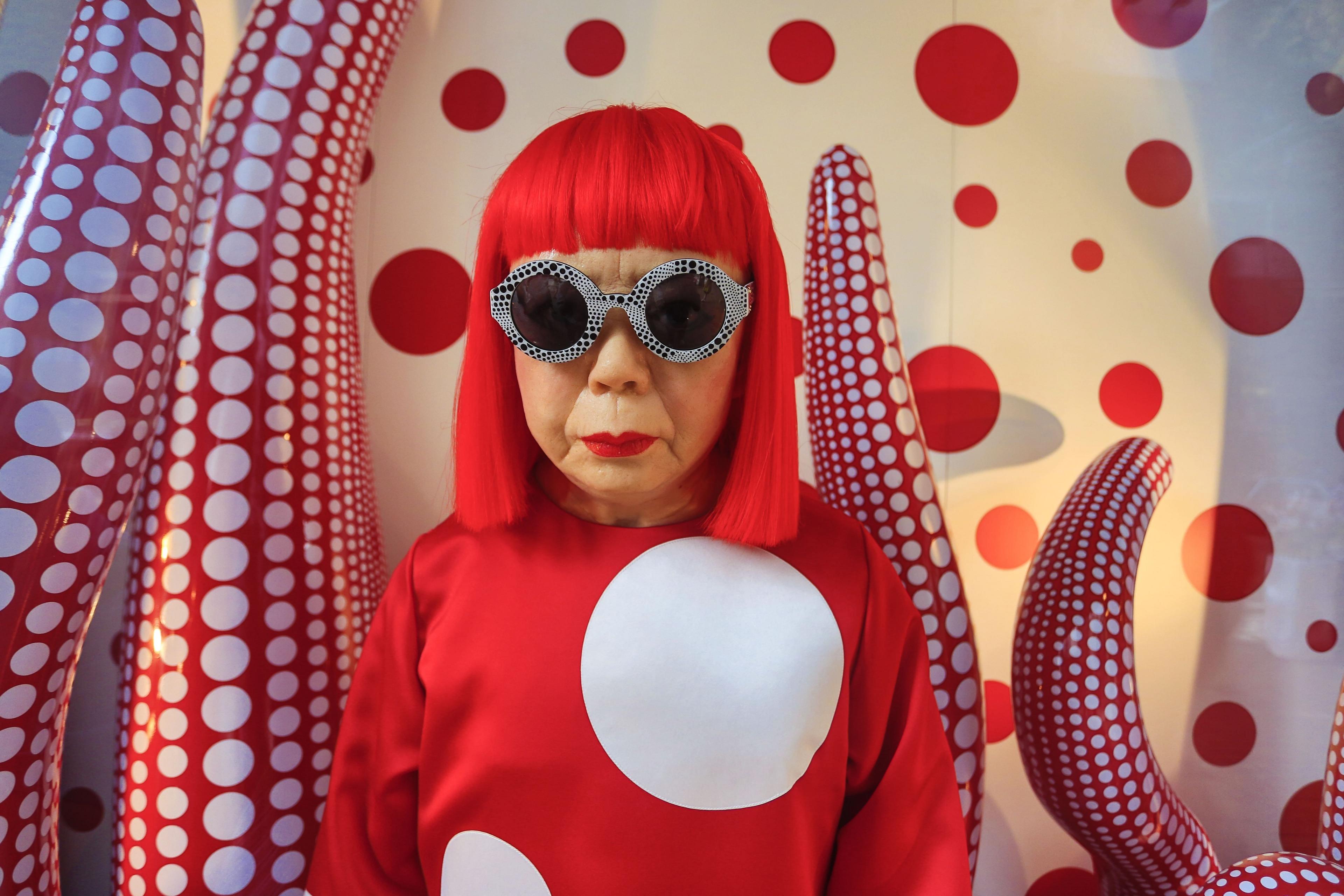 Image source, Getty Images
Kusama died at a hospital in Tokyo on 14 August, the statement said.
It added: "She continued to paint until her final days, never setting aside her brush, and continued exploration of forever love and eternal soul.
"We will carry forward Kusama's wishes and, through art, continue to bring hope and strength for the future to people around the world."
Kusama became one of the world's most recognisable artists and a global cultural icon in her 80s and 90s, after having been mostly overlooked for decades.
Poorly received by a masculine-dominated art scene of New York in the 1960s, Kusama caused a stir with her exhibitions of phallic sculptures, including a fabric couch, and frequent displays of nudity.
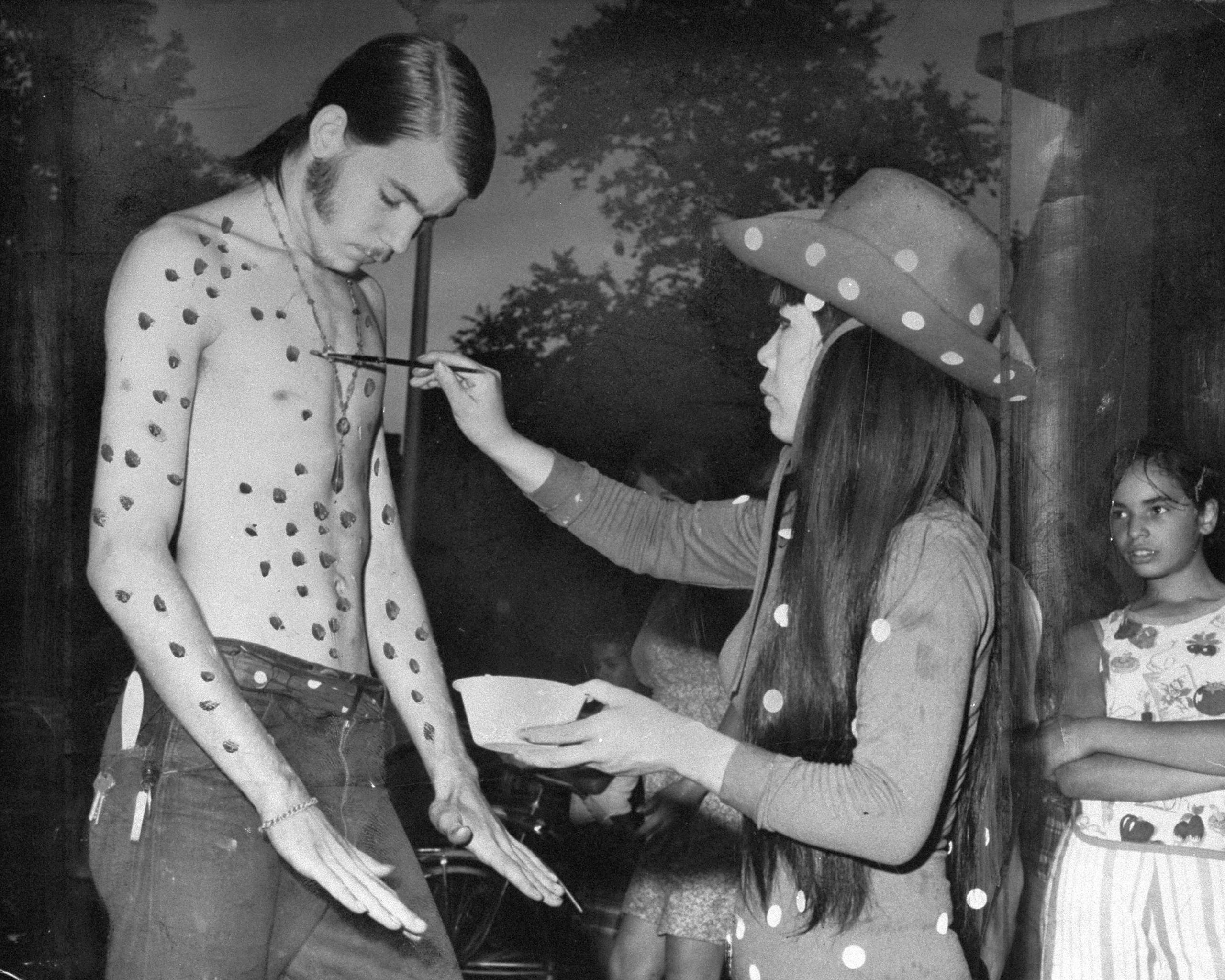 Image source, NY Daily News via Getty Images
Frequent nudity in her works drew scorn in Kusama's native Japan.
In 1965, her work "Infinity Mirror Rooms", in which mirrors and lights create seemingly endless spaces, attracted millions of visitors. Later, her polka-dot and pumpkin works became highly sought-after.
However, she became distressed when her ideas were copied by or "inspired" her male contemporaries – including Andy Warhol, Claes Oldenburg and Lucas Samaras – whose works would be displayed at more prestigious galleries.
After spending years watching male artists gain recognition for her work, she returned home to Japan – feeling dejected and distraught.
She entered a psychiatric facility receiving treatment for mental illnesses, where she would live and work for the remainder of her life.
Miraculously, she managed to find a hospital where the doctors were interested in art therapy and checked herself in. Such a secure environment allowed her to focus on creating art.
Through the 1970s and early 80s, her work depicted uncharacteristically dark series' of collages in which she embraced the imagery of natural life cycles.
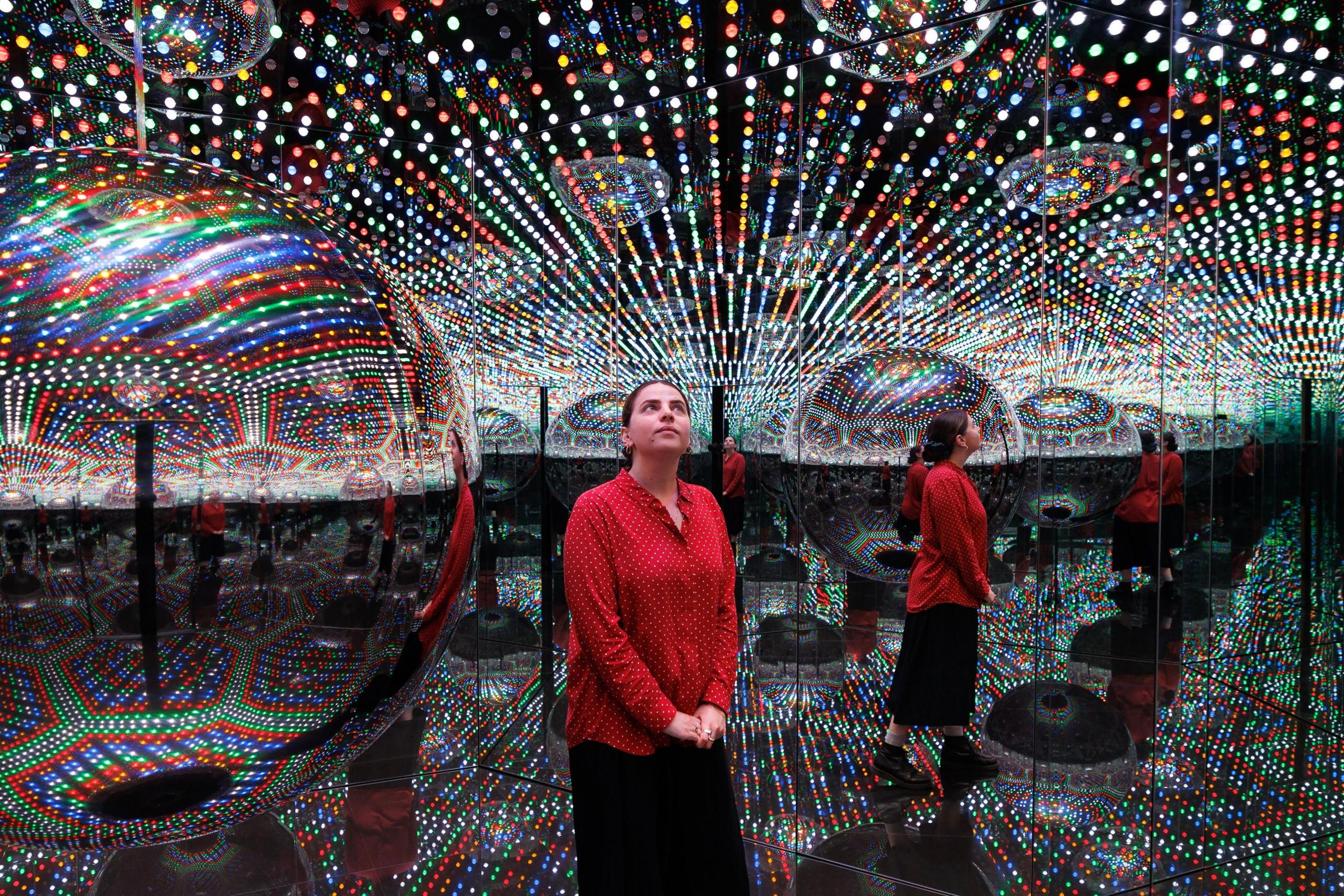 Image source, Getty Images
Kusama's Infinity Rooms immersed visitors in the installation using mirrors and lights
Kusama went on to become Japan's first solo artist to represent the country at the 1993 Venice Biennale. Twenty-seven years earlier, she had turned up, uninvited, and laid down 1,500 mirror balls on the ground.
The roaring success of the exhibition led to a huge transformation in how she was received both in Japan and abroad.
In 2001, she was awarded the Asahi Prize – recognising outstanding cultural, academic and artistic contributions in Japan.
One of her paintings fetched about $10.5m (£7.7m) at auction in 2022, making her works some of the highest-earning in the world for a female artist.
Then, her work appeared in major museums and collaborations with luxury brands including Louis Vuitton.
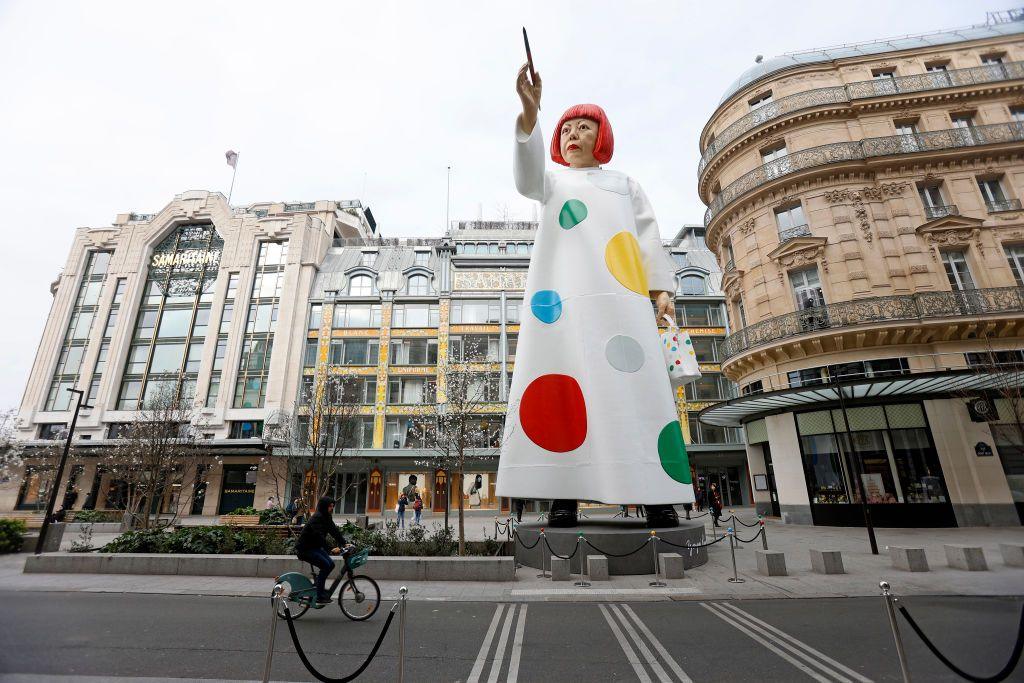 Image source, Chesnot/Getty Images
Sculpture of Yayoi Kusama erected outside Maison Louis Vuitton in Paris, 2023
As a child, Kusama experienced hallucinations of embers and flashing – later using her art as a vehicle for others to understand her vision of the world.
"One day, after seeing a tablecloth with a red flower pattern on a desk, I saw the same red flower pattern all over the ceiling, windows and pillars. It filled the room, and covered my body," she wrote in her autobiography.
Kusama was born in 1929 in the rural provincial town of Matsumoto, based in the central Nagano region of Japan.
Her parents did not support her early moves to study painting in Kyoto.
She was later told that her artistry caused great shame to her conservative family. Some elements of the US press also criticised what they perceived as an endless desire for publicity – either in her messaging promoting peace or critiquing the art establishment.
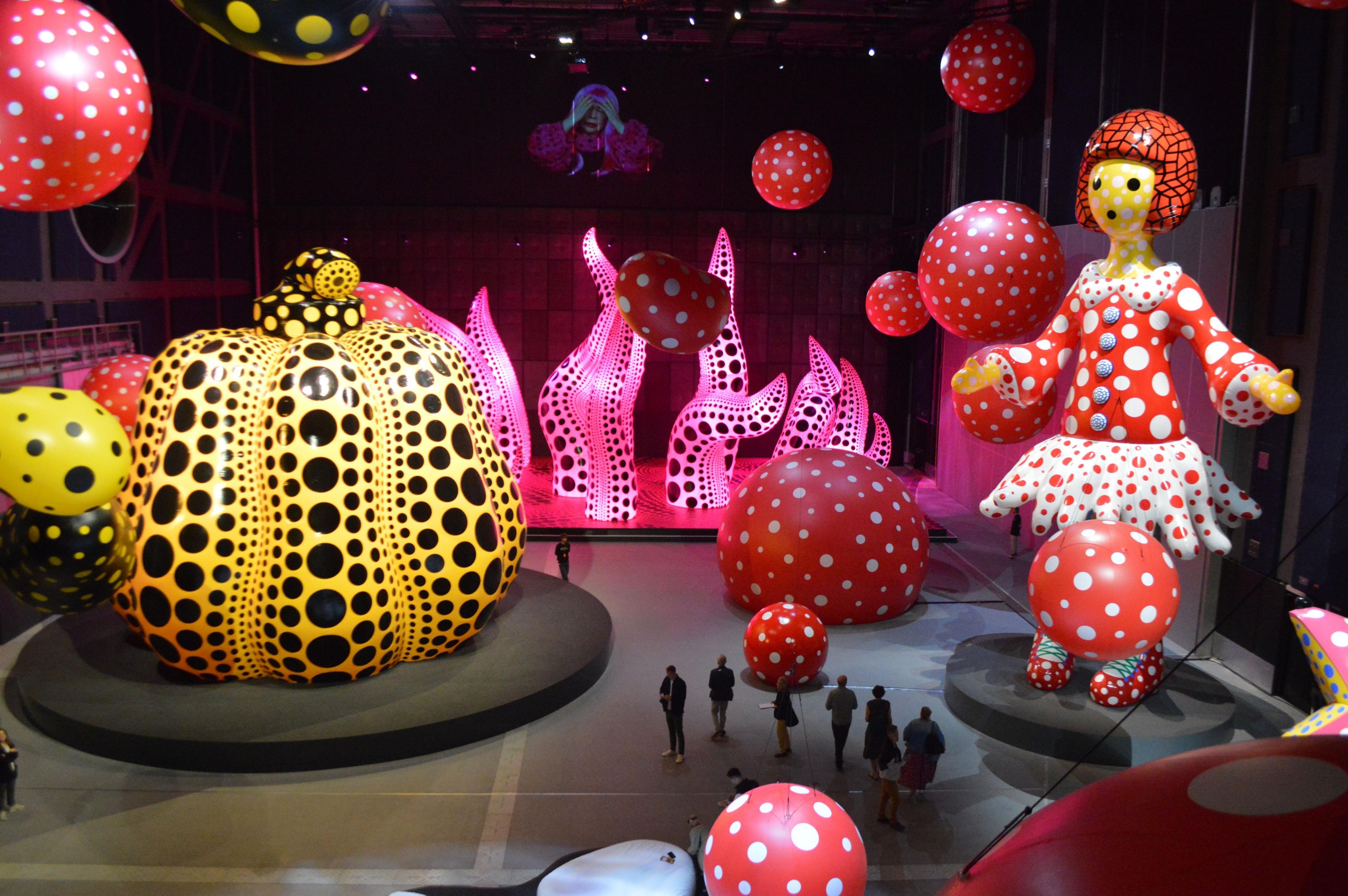
Kusama staged a major exhibition in Manchester in 2023
The world, along with her native Japan, radically changed its perception of Kusama in her later life.
Social media fuelled a spike in interest over recent years – with her museum's bold floral shapes and shiny steel orbs turning into a desired backdrop for selfies and poses.
Among her many motifs, the pumpkin has become iconic in her works. To her, the vegetable represented comfort and nostalgia.
She once said in an interview, "Pumpkins speak to me."
"They embody a sense of stability and gives me peace of mind."
In her hometown of Naoshima, visitors coming by ferry are greeted by her outdoor Red Pumpkin sculpture covered in bold, black polka dots.