In Space, Magnets Could Unlock Acceleration Without Rocket Fuel - Jalopnik
Y'alax/Shutterstock One of the primary limiting factors for satellites is that they can never refuel. While they might get their electricity from solar pane...
Y'alax/Shutterstock
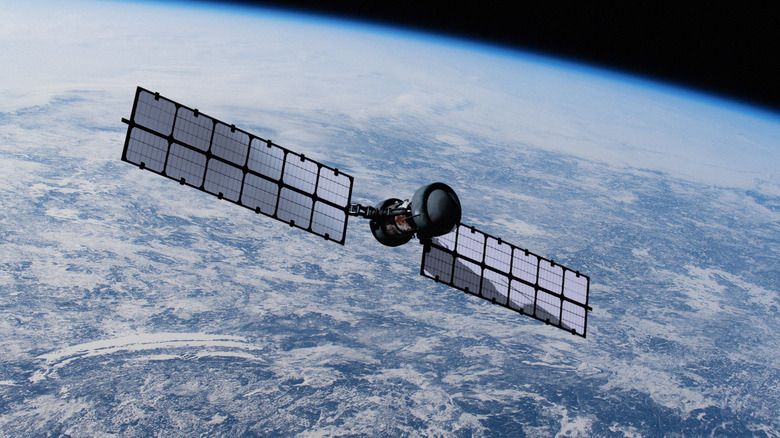
One of the primary limiting factors for satellites is that they can never refuel. While they might get their electricity from solar panels, they move using fuel-powered thrusters. Once the satellite is out of gas, it just becomes dead weight in space (if it wasn't intentionally de-orbited beforehand). So what if there was a way to move them without using gas at all? That would allow satellites to do far more than they currently do, since every move is treated as precious today. Well, New Zealand startup Zenno Astronautics thinks it may have found a way to do that using superconducting magnets. If it works at scale, it could transform the orbital economy.
Earlier this month, Zenno completed the first successful on-orbit test of its Z01 Supertorquer system aboard an Impulse Space satellite called Mira, as reported by Space.com. The idea is to have electromagnets positioned along the spacecraft's axes of rotation. They draw electrical power from the satellite's solar panels, producing a magnetic field that interacts with Earth's. In the atmosphere, this doesn't create enough force to overcome air pressure and friction. Guess what low-Earth orbit doesn't have much of?
For now, Zenno is only aiming for attitudinal control, or the orientation of the spacecraft. Even if that's all the device can do, that would be an enormous savings in fuel, extending the satellite's total usable life. If future development goes well, however, Zenno hopes to actually propel satellites one day. In the best-case scenario, maybe cargo and even astronauts can get to the Moon and Mars using nothing but magnets.
What magnets in space could do for us
Superconductivity is a phenomenon in which electrons move through a circuit without resistance. That allows for much larger currents, and therefore, much more powerful magnetic fields for the same power input and physical size. The Achilles heel here is that this is only achieved at extremely low temperatures, typically just a few degrees above absolute zero itself. What's changed recently is that new materials are being developed that can do this at much higher temperatures; Zenno's device works at a positively balmy -328 degrees Fahrenheit. To maintain that, Zenno uses a heat pump to keep the wiring cold. Remember that even though space is a void, the satellite is in sunlight, which raises Mira's temperature to about 68 degrees Fahrenheit.
So, what good is all that? First off, mass is everything in space, so the less mass (fuel) you need to have on your spacecraft, the better. Second, satellite operators are incredibly careful about making any positional adjustments, since every single use of the thrusters expends the only fuel the orbiter will ever have. In a world where they used magnets instead, operators would be free to do whatever movements they liked, meaning that satellites could perform much more elaborate maneuvers every day. That opens up a whole new world of capabilities in orbit. NASA imagines that these systems could enable satellite swarms that collectively make for one telescope lens far more adjustable than the static ones on the James Webb or Nancy Grace Roman Space Telescopes, for example.
In the meantime, there's also a big R&D push to figure out how to refuel satellites on-orbit, or in other words, put gas stations in space. While that would require complex docking maneuvers, it wouldn't rely on an all-new propulsion technology. SpaceX is hard at work on this capability, since its plan to land astronauts on the Moon requires refueling its new Starship rocket on-orbit around 15 times. However engineers figure this out, it will be good news for all of us when satellites can stay in orbit for longer without crashing down on us.